

-
Single mother receives a k kidney transplant
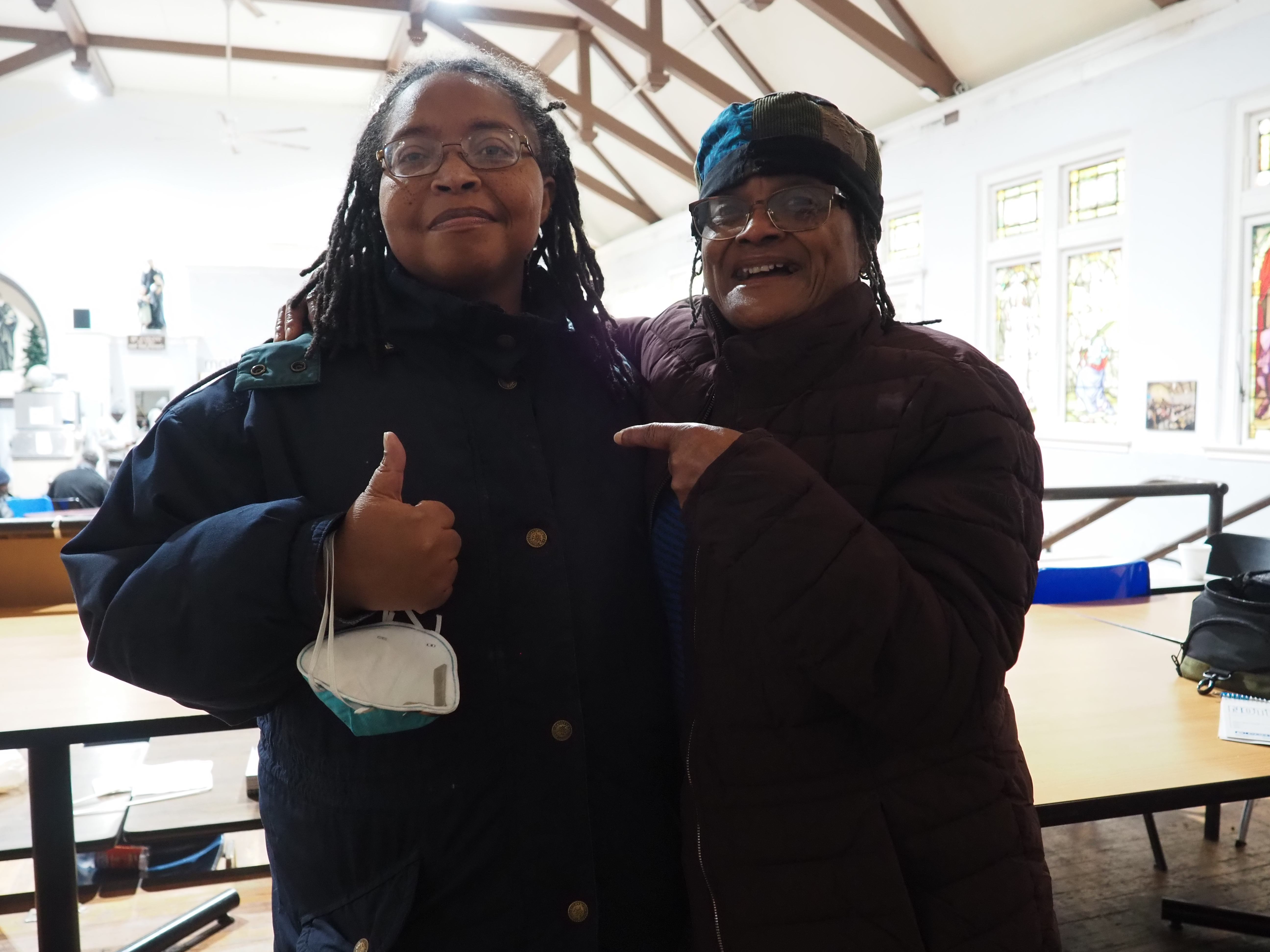
Demishia’s birthday present came early.
As Demeshia was going about her normal morning routine, she received a long-awaited phone call at 5:30 a.m. on Dec. 3, 2025.
The man on the other line said, “We have a kidney.”
“I was very surprised. I was like, ‘Wow,’” Demishia said.
Demishia was getting ready to drop off her 9-year-old daughter, Kira, at the bus stop.
She and her mother, Ruby, packed their bags, jumped in the car, and drove to UofL Health – Jewish Hospital as fast as they could.
Five to six doctors were awaiting Demishia when she arrived. The surgery took four and a half hours.
“I feel good. I’m still in the healing process,” Demishia added.
In general, the average wait time for a kidney transplant is three to five years depending on where you live and blood type. Demishia, a client who lives on our Special Works Campus and turned 47-years-old on Jan. 31, received a much-needed kidney transplant.
“I feel very grateful because, let me tell you something, doing dialysis three days a week takes a toll on your body,” she said. “When you come home, you feel nauseated. Your back hurts and you feel real, real tired. You don’t want to do anything,” she said.
In 2019, the overwhelming stress in Demishia’s life made her body sick. Within a year’s time, she went through a rough marital separation. Her ex-husband was on drugs. They were evicted from their apartment.
Shortly thereafter, Demishia became sick and saw the doctor, who told her that all of this “stress” caused someone who had no prior health complications to experience double kidney failure.
As Bessel A. van der Kolk says in “The Body Keeps the Score”, “We have learned that trauma is not just an event that took place sometime in the past; it is also the imprint left by that experience on mind, brain, and body. This imprint has ongoing consequences.”
One of those traumatic “consequences” was double kidney failure. The stress in Demishia’s life took such a toll on her body. She had to quit her job of six years. She and Kira ended up in a local shelter for 14 months. Not to mention the pandemic was spreading.
For more than six years, Demishia went to dialysis three days a week for about four hours. After deciding to go on the kidney transplant waiting list in Sept. 2025, doctors told her she had to quit smoking. She did so “cold turkey.”
Demishia’s mother, Ruby, is a former nurse and cares for her. She also has a nurse that visits twice a week.
“It was a happy day. I don’t think anyone could steal my joy right now,” Ruby added.
Demishia would like to give herself a year or so to make a full recovery and regain her energy before returning to the workplace.
Demishia and Kira live in one of our permanent supportive housing (PSH) units.
For the past five plus years, Demishia and Kira have experienced stability, safety, and support.
“It helps me a lot. It helps me to get my mind together. It’s so much better,” Demishia said.
After a kidney transplant, it helps to be able to have a home to come back to for rest and recovery.
This template controls the elements:
FOOTER: Footer Title, Footer Descriptions
CUSTOM MENU: Images and columns into header main menu submenu items
* This message is only visible in administrative mode
ST. VINCENT DE PAUL | LOUISVILLE
Send correspondence to
PO Box 17126
Louisville KY 40217-0126
Visit us at
1015-C South Preston Street
Louisville, KY 40203-2733
(502) 584-2480
Privacy | Terms | Refunds | Photo & Video
| Follow Us: |  |  |  |  |
|
|
 |